Northern Samar has logged 966 dengue cases in 2026, roughly twice the 447 recorded in 2025, according to figures presented to the province's health board this week. Outbreak News Today reports that the count was delivered during a Provincial Health Board meeting, where officials also outlined a set of stepped-up prevention and surveillance measures.
The province's top official, Governor Harris Ongchuan, who chairs the board, directed local authorities to reinforce dengue prevention, monitoring and mosquito-control work across Northern Samar.
Why it matters
Dengue is a mosquito-borne viral illness that can become severe if treatment is delayed, and a caseload that has doubled year on year puts pressure on clinics and local health teams. According to Outbreak News Today, the provincial report stressed that consulting a doctor early and receiving timely medical care are central to preventing severe illness and lowering deaths linked to the disease.
The surge also points to a wider surveillance challenge: the province's monitoring unit is still tracking incidence, and the response now depends on coordination between provincial offices, municipal governments and residents themselves.
What the surveillance data shows
Nick Andrew Cardenas of the Department of Health in Northern Samar presented the update through the province's Epidemiology and Surveillance System, Outbreak News Today reports. The data showed a marked climb in cases between the first week of July and the third to fourth week of September. In the worst single week of that stretch, the province recorded 111 cases.
The report identified five municipalities with the highest case counts in Northern Samar. Outbreak News Today notes that other municipalities also logged infections, though in smaller numbers.
The figures were shared with the Provincial Health Board, the body that sets the province's health priorities and which the governor leads. The board and the provincial government have both flagged the increase as a concern requiring action rather than monitoring alone.
The measures ordered
Acting on recommendations from local health officials, Governor Ongchuan backed a package of interventions covering mosquito control, public information and disease tracking.
Communities are to be mobilized for intensive search-and-destroy efforts, targeting places where dengue-carrying mosquitoes breed. In areas with confirmed cases, authorities will combine vector-control methods, including fogging or misting, following what officials describe as the 1-3-7 strategy — a timeline-based approach to case detection and response.
The plan also calls for targeted indoor residual spraying in identified locations, and for stronger awareness campaigns alongside larval surveys, which are used to locate potential breeding sites. On the surveillance side, the province aims to reinforce municipal and provincial epidemiology and reporting systems so that cases are detected, monitored, reported and answered quickly.
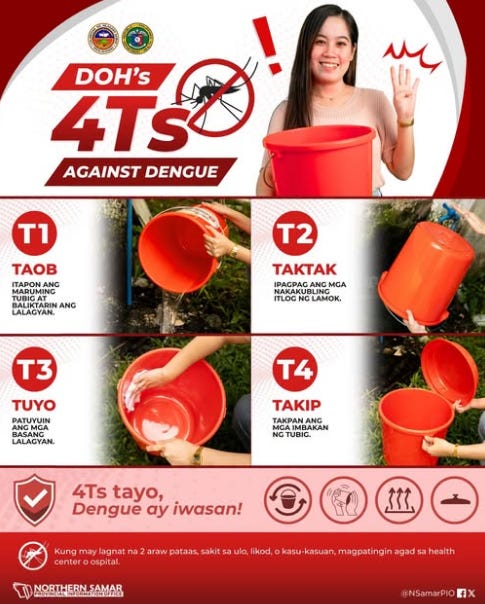
The governor also urged residents of Northern Samar, known locally as Nortehanons, to take an active part in prevention and control. Health authorities asked communities to check their surroundings regularly, remove standing water and other places where mosquitoes could breed, and seek medical attention as soon as dengue symptoms appear.
Officials framed the combined push — government response plus community participation — as the way to protect residents' health and keep the disease from spreading further in the province.
What to watch
The province's epidemiology unit continues to monitor dengue incidence in Northern Samar, and the coming weeks will show whether the case curve flattens after the new control measures take effect.